

Your best source on business and economy news from India
Provided by AGP
Eye Allergy Treatment Market to Surpass $5.97 Billion by 2031, Fueled by Increasing Eye Allergy Prevalence: Industry Research by The Insight Partners.
Prescription-to-Over-the-Counter Transition and Surging Geriatric Population Accelerate Demand for Eye Allergy Treatments
New York, NY, May 04, 2026 (GLOBE NEWSWIRE) -- A new comprehensive market research report published by The Insight Partners reveals that the Global Eye Allergy Treatment Market is projected to grow from US$ 3.92 billion in 2024 to US$ 5.97 billion by 2031, registering a CAGR of 6.3% during the forecast period from 2025 to 2031.
Market Growth Highlights:
- The Eye Allergy Treatment market in North America is expanding steady with a CAGR of 6.6%. Emergence of small- to mid-size companies engaged in developing differentiated delivery systems and long-acting therapies is one of the key drivers of Global Eye Allergy Market. Moreover, OTC availability of eye allergy drugs and rising airborne irritants & allergans are projected to boost the market expansion of eye allergy treatment.
- The eye allergy treatment market in the United States is expected to register a CAGR of 6.9% during 2025-2031 and is driven by the rising prevalence of allergic conditions, which stem from environmental pollution, urbanization, and increased allergen exposure.
- Growing awareness and healthcare spending contribute to market expansion. An aging population drives higher demand, while patients increasingly prefer easily accessible over-the-counter treatments. Personalized medicine is a prominent and increasingly popular trend. Digital health and telemedicine are also gaining wider acceptance. In addition, advanced therapies, including biologics, sustained-release drug delivery systems, and multi-action eye drops, are enabling new treatment approaches that improve patient outcomes.>
- Primary Growth Driver: The Rising Prevalence of Eye Allergies is propelling the demand for treatments. According to a May 2024 article titled "Allergic Conjunctivitis: Review of Current Types, Treatments, and Trends," nearly 40% of North America's population grapples with some form of allergy, while globally, over 20% (~1.5 billion people) are affected by ocular allergies. A 2025 cross-sectional study among high school students revealed a staggering 49.3% prevalence of ocular allergies, with seasonal allergic conjunctivitis comprising 90.3% of cases. This increasing burden of eye allergies is accelerating the need for effective therapies.
- Key Segment: The Eye Drops segment remains dominant and exhibits the highest CAGR (6.7%).
Download Research Sample PDF @ https://www.theinsightpartners.com/sample/TIPRE00007418/
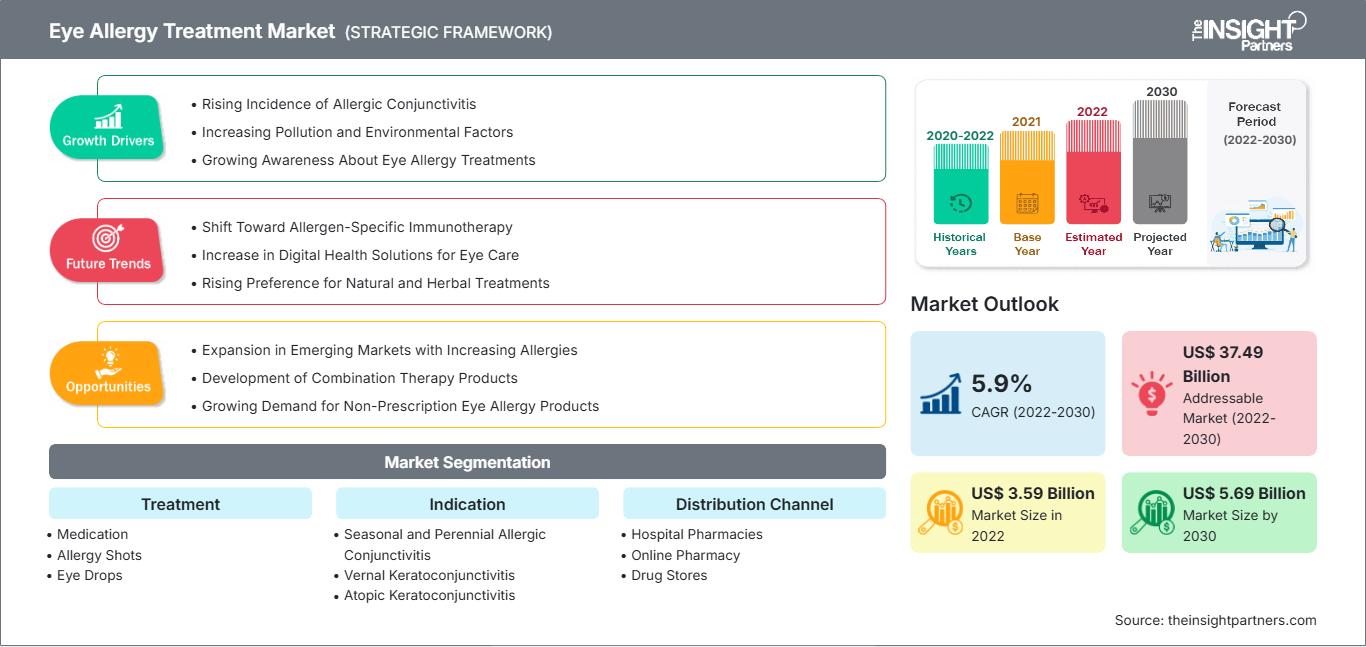
The market growth is driven by the increasing prevalence of ocular allergies driven by pollution, climate change, and increasing allergen exposure. The treatment demand increases as screen time has increased, leading to eye irritation. Patients have become more aware of diseases, and receive quality care because of diagnostic advancements. Growth is also supported by easier access to over-the-counter medications and expanding healthcare infrastructure in emerging markets.
Market Momentum Driven by Heightened Awareness and Diagnostics:
Heightened public and medical awareness of eye allergies has transformed the landscape of ocular health management. The Asthma and Allergy Foundation of America (AAFA) has expanded educational programs through its 2025 Allergy Capitals Report, which shows cities where pollen and pollutants cause increased medical symptoms.
The research study "Attitudes and awareness of professionally active people on eye diseases prevention" shows that only 32% of professionals possess adequate knowledge about prevention methods, which creates a need for specific outreach efforts to fill this knowledge gap. Community screenings in Ghana found that 26.4% of school children tested positive for allergic conjunctivitis. This prompted increased health initiatives, which led to a 15% rise in diagnosed cases through participating programs. These activities help people understand their condition better while they learn to recognize early symptoms, which include itching and redness, which are ignored initially.
New diagnostic technologies now create better results through enhanced eye allergy treatment methods. Diagnostic platforms powered by artificial intelligence, together with molecular diagnostic systems, now use IgE testing and genetic testing to determine allergen sensitivity, which helps doctors diagnose patients within hours instead of weeks. The use of proteomics techniques allows researchers to identify triggers in 80% of cases, which helps develop custom treatments with specific antihistamine medicines. The combination of better understanding and new diagnostic methods leads to faster medical response times, which drives expansion in the industry.
Get a customized report to align these insights with your strategic business objectives
| Report Attribute |
Details |
| Market size in 2024 | US$ 3.92 Billion |
| Market Size by 2031 | US$ 5.97 Billion |
| Global CAGR (2025 - 2031) | 6.3% |
| Historical Data | 2021-2023 |
| Forecast period | 2025-2031 |
Major Eye Allergy Treatment Companies Include:
- Bausch + Lomb Corporation
- Alcon AG
- AdvaCare Pharma USA LLC
- AbbVie Inc.
- Sun Pharmaceutical Industries Ltd
- Bayer AG
- ZEXUS PHARMA
- Grevis Pharmaceuticals Pvt Ltd.
- Santen Pharmaceutical Co. Ltd.
- Lupin Ltd.
Eye Allergy Treatment Market Segmentation Analysis:
Eye Drops Segment to Hold the Largest Market Share and Register the Highest CAGR
Eye drops dominate the eye allergy treatment market due to their targeted, fast-acting relief for localized ocular symptoms, delivering medication directly to affected areas with minimal systemic side effects.
The formulations contain antihistamines, mast cell stabilizers, and corticosteroids. They also have combining agents that treat allergic conjunctivitis symptoms of itching, redness, and watering. The commonly used medications olopatadine (Pataday) and ketotifen (Zaditor) provide patients with easy access to over-the-counter treatment, which offers fast relief for their symptoms.
Market growth is supported by environmental factors such as air pollution and climate change, which lead to higher allergen exposure and result in increased eye irritation cases. The growing urban population leads to greater indoor mold exposure, which drives the demand for preservative-free eye products. The new drug delivery systems use single-use vials together with gel-based drops to provide better treatment results and patient satisfaction, which leads to more frequent patient usage.
Digital health campaigns increase public understanding about symptoms, which helps people identify their symptoms and practice self-care. People with seasonal allergies depend more on fast-acting products when there are seasonal allergy outbreaks. Pharmaceutical research develops steroid-sparing therapies, which minimize long-term health dangers through new medications that require fewer dosage applications to deliver effective results. The development of pediatric formulations provides a solution to the growing allergy problem that affects children.
The expansion of e-commerce has improved accessibility, particularly following the pandemic. Combined with regulatory focus on safety and emerging technologies such as nanotechnology for improved absorption, these factors continue to drive strong global growth in the eye allergy treatment market.
Request for a free demo of The Insight Partners’ Eye Allergy Treatment Market & Intelligence Platform
Asia Pacific region to Witness the Fastest Growth:
Asia Pacific is expected to record the fastest growth in the global eye allergy treatment market during the forecast period. This growth is supported by:
- Rising pollution and urbanization, which increase allergen exposure and eye allergy cases
- Improving healthcare infrastructure and better access to treatments
- Growing awareness of ocular health is driving early diagnosis and demand for therapies
Currently, Asia Pacific leads the market. Rapid urbanization across major countries such as China, India, and Southeast Asian nations has led to higher pollution levels, increasing the prevalence of allergic conjunctivitis and other ocular allergies. Increased public awareness about eye health leads people to visit medical facilities instead of using home treatments because healthcare services become more accessible through enhanced medical facilities and government programs. The rising disposable income of consumers enables them to purchase advanced medical solutions, which include antihistamine eye drops, mast-cell stabilizers, and combination therapies.
The region attracts significant investment from pharmaceutical companies because of its improved distribution networks and more business-friendly regulatory environment, which helps companies to introduce their new products to the market. The combination of environmental challenges, increasing healthcare participation, and economic development leads to strong market growth in Asia Pacific.
Eye Allergy Treatment Market Dynamics:
Driver: Prescription to Over-the-Counter Transition
The use of over-the-counter (OTC) medications has increased to the point that they now serve as a replacement for prescription-only therapies. The shift from prescription-only status to over-the-counter availability of drugs provides multiple advantages, which include improved access, increased comfort, and reduced costs.
The US Food and Drug Administration (FDA) requires a controlled process that uses scientific evidence to evaluate the safety and effectiveness of this procedure, which operates under strict US government regulations. Patients who struggle with eye allergies now possess multiple treatment options that do not require them to obtain prescription medications. The first dual-action eye drop product to receive OTC approval established its landmark status through the 2006 switch of Zaditor (ketotifen fumarate 0.025%) from Novartis to Bausch + Lomb. Alcon's Pataday (olopatadine hydrochloride) shows extremely fast expansion as a current product in the market. The product switched to over-the-counter status in 2020 when it introduced its 0.1% (Twice Daily Relief) and 0.2% (Once Daily Relief) formulations, which became the most prescribed active ingredients for eye allergies.
The launch of Pataday resulted in 58% of buyers entering the OTC eye allergy market for the first time, which indicates a rise in first-time self-treatment of the condition. The prescription-to-OTC switch will remain a key lever that shapes the upcoming evolution of the eye allergy treatment market, as urban areas and allergy-sensitive groups experience increasing rates of ocular allergy.
Opportunity: Emerging Market Penetration
Emerging economies offer a lucrative opportunity for companies in the eye allergy treatment market because urbanization, environmental pollution, and lifestyle changes have increased allergic conjunctivitis cases. Asia Pacific, Latin America, and Africa experience higher therapy demand as people become more aware of healthcare resources and accessibility. Pharmaceutical giants use customized approaches to maximize their business potential. The main priority for companies includes developing product formulations that enhance cost efficiency and user convenience through special preservative-free antihistamine drops that prevent humidity-related issues in Southeast Asian markets.
Companies can make eye allergy management a major public health initiative in emerging markets by focusing on affordable treatments, educational campaigns, and collaborative partnerships, creating both steady business benefits and reducing widespread patient discomfort.
Challenge: Side Effects Associated with Medications
Patients and healthcare providers must evaluate the dangers that both prescription and over-the-counter medications present, despite their ability to provide relief. The treatment of eye allergies hinges on understanding the associated risks because doctors must choose between effective treatment methods and patient-friendly solutions. Patients experience relief from itchiness through antihistamine eye drops, which include olopatadine (Pataday) and ketotifen (Zaditor) as their initial treatment option because these drops block histamine release.
A 2022 study published in the Journal of Allergy and Clinical Immunology found that 10–15% of users experience temporary stinging or burning when they apply the product to their eyes. The FDA post-marketing data shows that oral antihistamines such as loratadine (Claritin) and cetirizine (Zyrtec) provide users with systemic relief, while 5–10% of users experience drowsiness, which interferes with their regular activities.
The World Health Organization (WHO) estimates that adverse drug reactions contribute to 5–10% of hospital admissions worldwide, with ocular medications responsible for 2–3% of allergy-related incidents. The National Institutes of Health reported over 1.2 million annual visits for allergic conjunctivitis in 2024, which included 7% of patients who consulted about side effects.
Purchase the full report from The Insight Partners to learn more about growth opportunities in the global Eye Allergy Treatment Market.
Recent Developments:
- In July 2025, Lupin Limited launched Loteprednol Etabonate Ophthalmic Suspension, 0.5%, in the US. Loteprednol Etabonate Ophthalmic Suspension is bioequivalent to Lotemax Ophthalmic Suspension, 0.5%, of Bausch & Lomb Inc.
- In May 2024, Santen Pharmaceutical Co., Ltd. and Mitsubishi Tanabe Pharma Corporation launched Alesion Eyelid Cream 0.5%, a treatment for allergic conjunctivitis, in Japan. The two companies have entered into a joint sales promotion agreement for the product, which is marketed in Japan by Santen. This product is the world's first cream-type treatment for allergic conjunctivitis formulated for once-daily application to the upper and lower eyelids.
Related Reports:
The global allergy relieving eye drops market size is projected to reach US$ 2.37 billion by 2034 from US$ 1.45 billion in 2025. The market is anticipated to register a CAGR of 5.62% during the forecast period 2026-2034.
The global anti-allergic agents market size is projected to reach US$ 55.3 billion by 2034 from US$ 34.06 billion in 2025. The market is anticipated to register a CAGR of 5.53% during the forecast period 2026-2034.
The preservative-free eye drops market is projected to reach US$ 1.63 billion by 2031 from US$ 1.21 billion in 2024 and to register a CAGR of 4.7% during 2025–2031.
About The Insight Partners
The Insight Partners is a global market research and consulting firm delivering in-depth analysis and actionable insights across technology, media, telecommunications, healthcare, and industrial sectors. The firm supports organizations in identifying growth opportunities, understanding market dynamics, and making informed strategic decisions.
Explore E-insights – The Expert market intelligence platform developed by The Insight Partners. A Platform that offers impactful Market Intelligence at your fingertips to support your revenue goals and have competitive edge. Helps you accomplish objectives
Contact Us:
If you have any queries about this report or if you would like further information, please contact us:
Contact Person: Ankit Mathur
E-mail: sales@theinsightpartners.com
Phone: +1-646-491-9876
Also Available in : Korean | German | Japanese | French |Chinese | Italian | Spanish


Legal Disclaimer:
EIN Presswire provides this news content "as is" without warranty of any kind. We do not accept any responsibility or liability for the accuracy, content, images, videos, licenses, completeness, legality, or reliability of the information contained in this article. If you have any complaints or copyright issues related to this article, kindly contact the author above.
